Can Apple Home's AI camera features outsmart Amazon's and Google's? I put them to the test
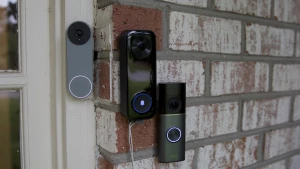
 Apple Intelligence for Home brings AI text descriptions to security cameras but costs up to three times more than competitors' offerings.
Summary
The article compares AI-powered camera features across Apple Home, Amazon Ring, and Google Nest, primarily testing video doorbells for notification speed, text description accuracy, facial recognition, and video search. Ring delivered the most consistently accurate facial recognition and its "Unusual Event" feature best reduced daily notifications by learning normal traffic patterns. Google provided the most descriptive and contextual text alerts and the most useful video search, though facial recognition was hit-or-miss. Apple's descriptions were often too brief or lacked detail, saying "someone" where Ring and Google specified a delivery person or uniformed individual, and motion notifications were less reliable due to reliance on third-party hardware like the Aqara doorbell. Apple does offer unique features like clip stitching across cameras and noteworthy events highlighting, but these are underwhelming so far. Pricing is a significant drawback: Apple charges up to $60/month for up to five cameras versus $20/month for unlimited cameras with Ring or Google. The article also examines privacy implications, noting that Apple processes video summaries in the cloud using Private Cloud Compute, while Ring introduced end-to-end encryption through its TAKE system, and Google relies on cloud processing. The conclusion is that AI makes cameras much better at describing what they see, but the next frontier is understanding what actually matters and enabling home automations based on camera intelligence — an area where accuracy of AI identification remains a key challenge. The author finds Apple Intelligence a reasonable deal for one camera at $10/month if you also need iCloud storage, but not competitive with multiple cameras.
(Source:The Verge)