Google thinks SpaceX's Starship has to launch 1,600 times before space data centers get off the ground
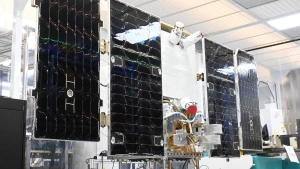
 Google's research suggests SpaceX's Starship needs roughly 1,800 launches before orbital data centers become economically viable.
Summary
Google launched a prototype orbital compute satellite onboard a SpaceX rocket to test whether its Tensor Processing Units can function in space as part of Project Suncatcher, a long-term plan to deploy a network of 81 satellites flying in close formation to process AI workloads in parallel. The satellite, built by Planet Labs, will power its TPU in 15-minute bursts while testing models for resilience against space's harsh conditions, and Google plans a more purpose-built two-satellite demo next year with laser communication links.
In a peer-reviewed paper published in Joule, Google estimated that to bring launch costs down to approximately $200 per kilogram by 2035, SpaceX would need to fly roughly 370,000 tons of payload into orbit — requiring about 1,800 Starship launches over the next ten years (180 per year at 200 metric tons per mission). This is a significant challenge for a vehicle that has never flown more than five times in a year, despite Elon Musk's claims that Starship could achieve hourly flight rates by 2029. Google's radiation testing confirmed its chips can handle inference workloads with very low error rates (about one in a million) over a satellite's five-year lifespan, though large-scale training runs would be problematic.
(Source:TechCrunch)