Anthropic’s announcement of a ‘Claude-led’ CRISPR-like discovery is sparking controversy. Here’s why
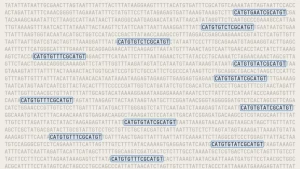
 Anthropic's claim that its AI Claude led a CRISPR-like gene-editing discovery sparks scientific skepticism and a priority dispute.
Summary
Anthropic announced that its AI model Claude, through 950 autonomous agents, identified a novel enzyme system in bacteriophages resembling CRISPR, potentially a new gene-editing mechanism. CEO Dario Amodei hailed the finding's scientific potential, and gene-editing stocks briefly fell. However, experts like Aaron Engelhart called it preliminary and incremental, noting the research is unpublished and the actual function of the viral sequences remains untested. Days later, Mario Rodríguez Mestre, a recent PhD, claimed his unpublished dissertation contained the same finding and that he had shared it with Claude, raising concerns about data usage and human direction. Scientists remain divided: some see a step toward AI autonomy, others view it as hype, emphasizing that AI excels at data mining but not imaginative breakthroughs, and that physical lab validation and robotics are needed before real advances in biology.
(Source:CNN)