The world can’t agree on AI safety. So why does the EU keep trying?
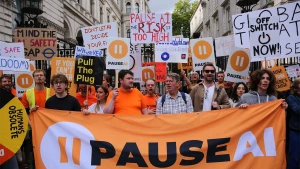
 The EU pushes for international AI safety agreements despite the US and China refusing to sign on, raising questions about its strategy.
Summary
The European Union is pushing for international agreements on safe AI development, even though the United States and China, the world's biggest AI powers, are unlikely to sign on. Finland and Norway rallied 30 countries behind a UN proposal to control frontier AI models, and the Dublin Declaration for trustworthy AI development has been backed by 24 EU members. These agreements are largely symbolic with no enforcement mechanisms, but voluntary pledges can build towards binding treaties or influence national laws. The closest to a binding international treaty is the Council of Europe's 2024 Framework Convention on AI and Human Rights, but the US has not ratified it. The US and China have pursued national or state-level AI agreements instead, effectively competing over who sets global AI governance rules. US President Donald Trump signed a non-binding "White House Accord on Superintelligence" in September. China established the World Artificial Intelligence Cooperation Organization with a development-focused emphasis. AI companies have differing approaches to safety, with Google DeepMind's Demis Hassabis and Anthropic's Dario Amodei supporting international standards, while OpenAI expressed caution about slowing down too much. The EU keeps pushing because it has already developed the world's leading AI regulation, but more regulation risks putting EU firms at a competitive disadvantage against US and Chinese counterparts. The EU has also experienced AI risks firsthand, such as when Anthropic shut the EU out of its most advanced model in May. Commissioner Henna Virkunen said rising safety incidents make international agreements more important. The next major moment is the June 2027 Geneva AI Safety Convention. Since August 2025, the EU has begun enforcing the AI Act against largest model providers. Some analysts suggest the EU should pursue voluntary safety and testing standards with other middle powers like Canada and the United Kingdom to set expectations for top companies.
(Source:The Parliament Magazine)