Verbalizable Representations Form a Global Workspace in Language Models
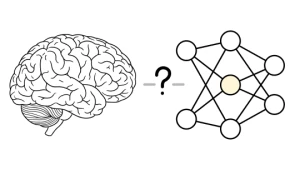
 Language models exhibit a 'global workspace' of verbalizable representations, enabling flexible reasoning and report.
Summary
This paper presents evidence that modern language models (LLMs) possess a functional distinction analogous to human conscious access, characterized by a privileged set of internal representations. These "verbalizable representations" form a "global workspace" that is accessible for reporting, modulation, and flexible internal reasoning, operating alongside a larger volume of automatic processing. The researchers introduce the "Jacobian lens" (J-lens) interpretability technique to identify these representations, which are essentially unspoken words that name the concepts the model is currently reasoning with. The J-space, composed of these J-lens vectors, exhibits properties mirroring conscious access: it supports verbal report, is subject to directed modulation, mediates internal reasoning, allows flexible generalization, and is selective in its use. Experiments demonstrate that interventions on J-space representations causally affect model behavior, impacting verbal reports, internal computations, and even automatic processing when explicitly requested. The J-space also shows structural signatures of a global workspace, being confined to intermediate layers, limited in capacity, and acting as a broadcast hub. The findings suggest that this functional architecture, similar to human conscious access, may emerge in LLMs due to computational pressures, offering a tractable system for studying consciousness-related questions.
(Source:Transformer-circuits Pub)