Can AI help solve the COBOL code crisis?
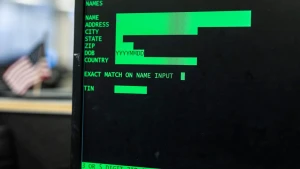
 OpenAI claims its latest AI models can substantially improve migration of aging COBOL code, but experts warn rewriting code is far from safely replacing critical legacy systems.
Summary
OpenAI announced that its newest AI models, particularly GPT-6.1 Sol, show "substantial improvements" in migrating legacy COBOL code to modern languages such as C++, Java, Kotlin, Python, and Rust while preserving original behavior. In OpenAI's evaluations, GPT-6.1 Sol achieved 87 percent behavior preservation accuracy at low reasoning effort and 98 percent at higher reasoning, far above earlier models. Anthropic has also promoted its Claude Code agent and a "code modernization playbook" for COBOL migration, a move that rattled IBM's stock. COBOL remains deeply embedded in critical infrastructure: IBM says it underpins over 40 percent of online banking systems, 80 percent of in-person credit card transactions, and 95 percent of ATM transactions, and it runs many government systems. Yet experts who spoke to The Verge caution that rewriting code is not the same as replacing a system. Vadim Zaytsev of the University of Twente noted that real legacy systems involve millions of lines of code, multiple languages, varied data formats, technical integrations, and organizational expectations, and that AI currently plays no major role in replacing or migrating legacy COBOL systems. Arie van Deursen of Delft University of Technology called OpenAI's blog "superficial" and said its benchmarks test simple, well-defined tasks far removed from actual modernization, especially the hard problem of breaking a complex system into replaceable units. Alastair Donaldson of Imperial College London stressed that the main challenge is understanding how systems work, and that even minor behavioral differences after migration are often unacceptable, making robust testing, documentation, and human verification essential. OpenAI acknowledged legacy code "is still far from a solved problem."
(Source:The Verge)