Anthropic's Claude autonomously designs protein binders targeting scorpion neurotoxins
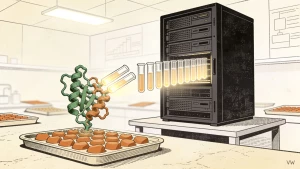
 Anthropic's Claude autonomously designed protein binders against scorpion neurotoxins, yielding 211 lab-tested candidates and 17 functional binders.
Summary
Anthropic and Citrini Research used an internal Claude model to autonomously generate protein minibinders against five scorpion neurotoxins from four scorpion species, producing 318,484 candidate designs over a 24-hour autonomous run after a single initial prompt. Of 211 designs tested in the lab, 17 met the criteria for a functional binder. Scorpion neurotoxins kill more than 3,250 people per year. The two strongest binders bound with high affinity to Cn2, a toxin from the Mexican scorpion, and lab tests suggest they dock at or near the same site as an antibody known to neutralize Cn2 in mice. Whether the binders actually function as an antivenom has not been tested. Claude operated inside Claude Science, Anthropic's AI environment for researchers. After the initial prompt, Claude worked autonomously for 24 hours before the research team steered the effort with additional instructions. Claude selected 180 candidates from its output; the team added 31 more, bringing the total tested to 211. In an earlier study, Claude had designed mini-binders against 14 of 15 target proteins, achieving hit rates of 22 to 35 percent compared to a typical 10 to 15 percent baseline. External experts Susana Vázquez Torres and Timothy P. Jenkins called the work a promising first step, and two independent labs confirmed the results. The project lands as OpenAI simultaneously moves deeper into life sciences, having acquired Orchestra Bio and folded its drug-development agents into the Rosalind suite. Both efforts position frontier-model companies as direct participants in wet-lab biology pipelines rather than tool providers, though Anthropic's approach relies on autonomous design generation while OpenAI's Rosalind path centers on acquisition of existing pharma-agent infrastructure.
(Source:Vector Wire)